Sartorius: location, how to remember it, English and Latin names
Introduction
This article explains the sartorius in detail: what it is, where it lies, how to remember it, and its English and Latin names, using human anatomy illustrations.
Watch the video about the sartorius here (in Japanese)
Download teamLabBody Pro for free
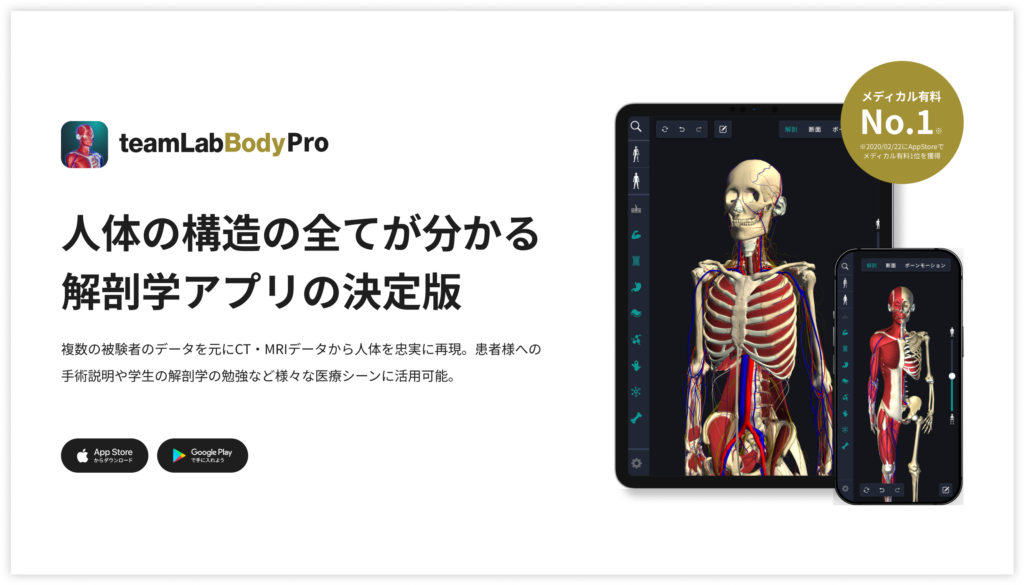
A 3D anatomy app that shows every structure of the human body
Download teamLabBody Pro here!
What is the sartorius, and what does it do?
Looking at a human anatomy illustration, you can see that the sartorius is one of the longest muscles in the body.
This muscle works especially when you bend the hip joint and bend the knee slightly.
Its main role, however, is to make the movement of the whole leg smooth and keep it coordinated.
Where the sartorius lies
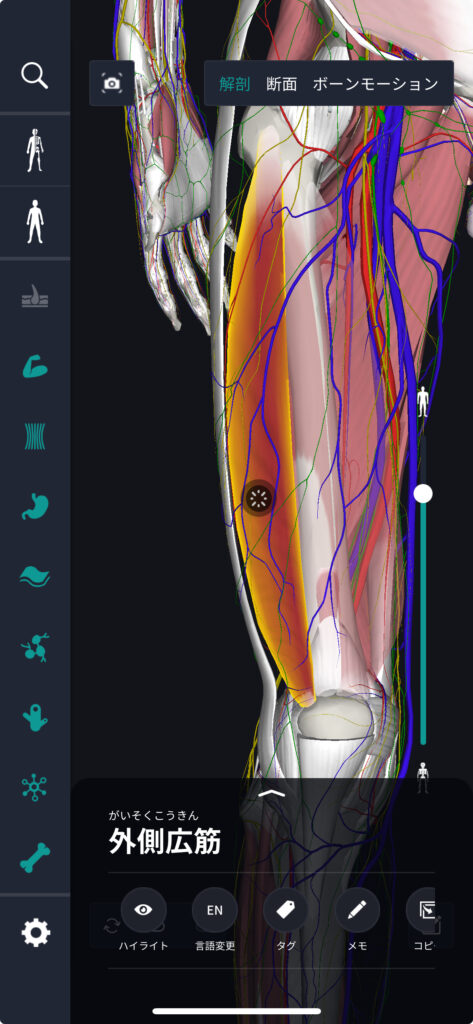
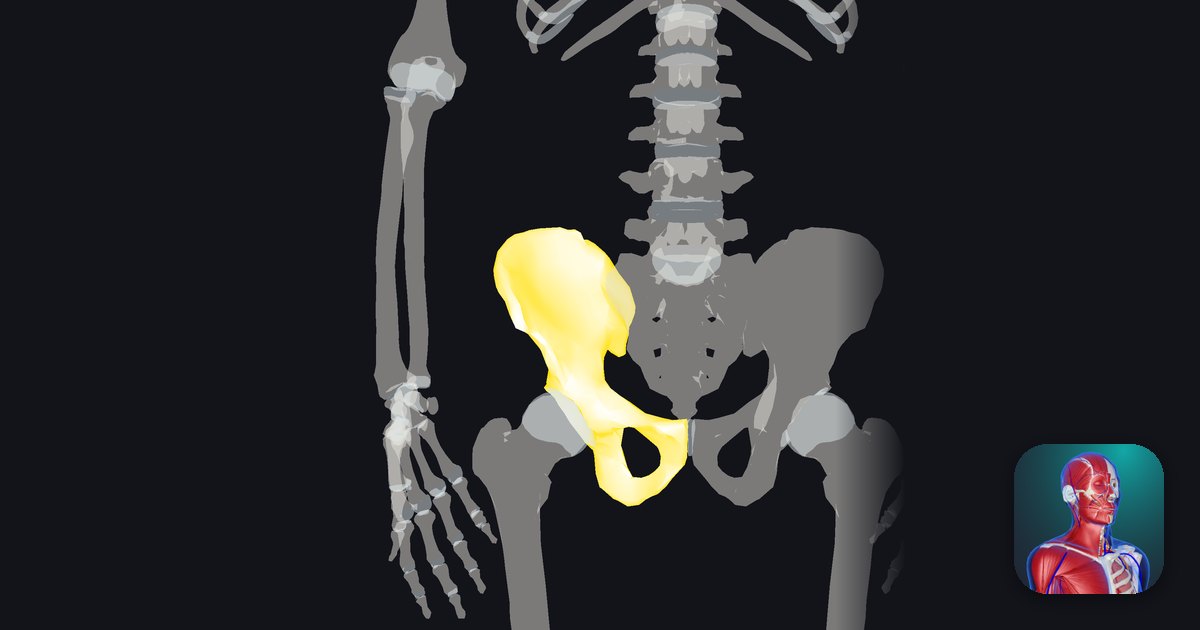
If you check its position on an anatomy illustration, you can see that the sartorius runs from the anterior superior iliac spine at the top of the pelvis, obliquely across the front of the thigh, to the medial side of the upper tibia (the pes anserinus).
It is the longest muscle in the human body, running obliquely across the front of the thigh from upper lateral to lower medial.
Useful for exams: tips for remembering the sartorius
One tip for remembering the sartorius with an anatomy illustration is to keep in mind that it is one of the longest muscles in the human body.
Its main actions are bending the hip and slightly bending the knee, but even more important is that it moves the whole leg smoothly and keeps it coordinated.
Its Japanese name, 縫工筋 (hōkōkin), means "tailor's muscle", and the Latin name sartorius also comes from sartor, "tailor". The name refers to the cross-legged posture once used for sewing, which this muscle helps produce.
English and Latin names of the sartorius
When looking for the sartorius on an anatomy illustration, it also helps to remember its English name, "Sartorius muscle", and its Latin name, "Musculus sartorius".
Summary
The sartorius flexes, abducts and laterally rotates the hip and flexes the knee. Sitting cross-legged brings all of these movements together.
If you check its position on an anatomy illustration, you can see that it runs from the top of the pelvis to the inner side of the knee.
This muscle moves the whole leg smoothly and keeps it coordinated.
And by using learning tools such as anatomy illustrations, you can see that "supporting" muscles like this are just as important as the "leading" ones.
This time we explained where the sartorius is, how to remember it, and its English and Latin names.
How was it?
I hope this article has deepened your understanding of anatomy.
Learning is a long road with no end, but I sincerely wish you success. Let's keep learning together and work toward the national exam!
Look forward to the next article.
Learn more with the anatomy app teamLabBody Pro!
teamLabBody Pro is a 3D human anatomy app that covers the whole body: muscles, organs, nerves, bones and joints.
The human body is faithfully reproduced from CT and MRI data of multiple subjects. Medical-textbook-level content supervised by physicians can be viewed freely from any angle, so the app can be used in many medical settings, from explaining operations to patients to students' anatomy study.
If you would like to see the region introduced here in more detail, download the anatomy app teamLabBody Pro.
Download teamLabBody Pro for free
A 3D anatomy app that shows every structure of the human body
Download teamLabBody Pro here!