Common carotid artery: position, branches and English name
- Introduction
- What is the common carotid artery?
- How the name is read in Japanese
- Features of the common carotid artery
- Where the common carotid artery is
- How to remember the common carotid artery
- The common carotid artery in English and Latin
- Fun facts about the common carotid artery
- Related structure: features of the brain
- Related structure: position of the brain
- Related structure: fun facts about the brain
- Quiz on the common carotid artery, with answer
- Summary
Introduction
This article takes a detailed look at the common carotid artery.
The common carotid artery is the main artery of the neck supplying the head and neck; it is the route that carries blood from the heart to the brain and face. In this article we cover its position, how its Japanese name is read, its English name, how it divides into the internal and external carotid arteries, and its relationship with the brain. Use this article to deepen your understanding of the body.
Watch the video about the common carotid artery here (in Japanese)
Download teamLabBody Pro for free
A 3D anatomy app that shows every structure of the human body
Download teamLabBody Pro here!

What is the common carotid artery?
The common carotid artery is one of the important blood vessels of the body; it supplies oxygen-rich blood from the heart to the head and neck. It supports the body's physiological functions and plays an important role in delivering nutrients to the brain.
How the name is read in Japanese
In Japanese the common carotid artery is written 総頸動脈 and read sōkei dōmyaku.
Features of the common carotid artery
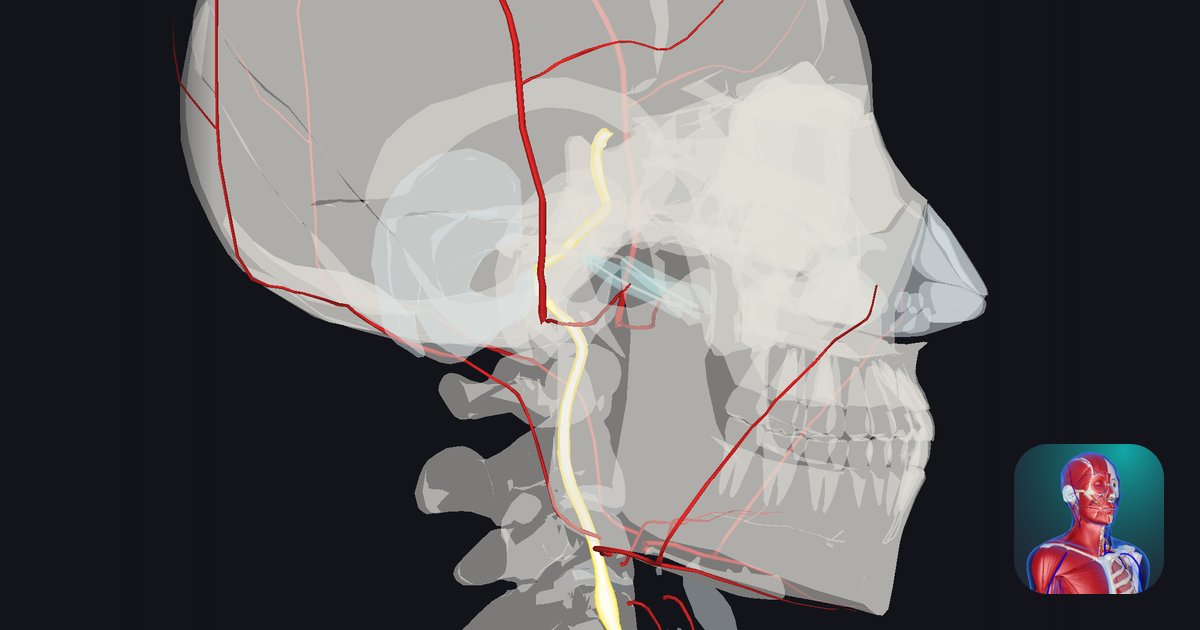
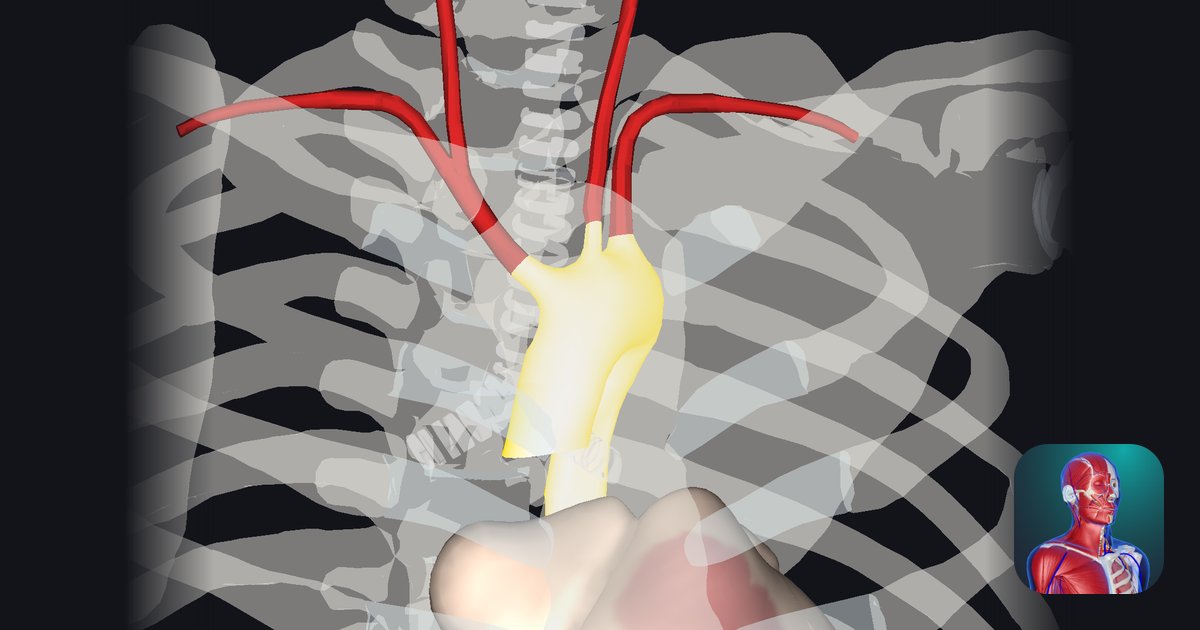
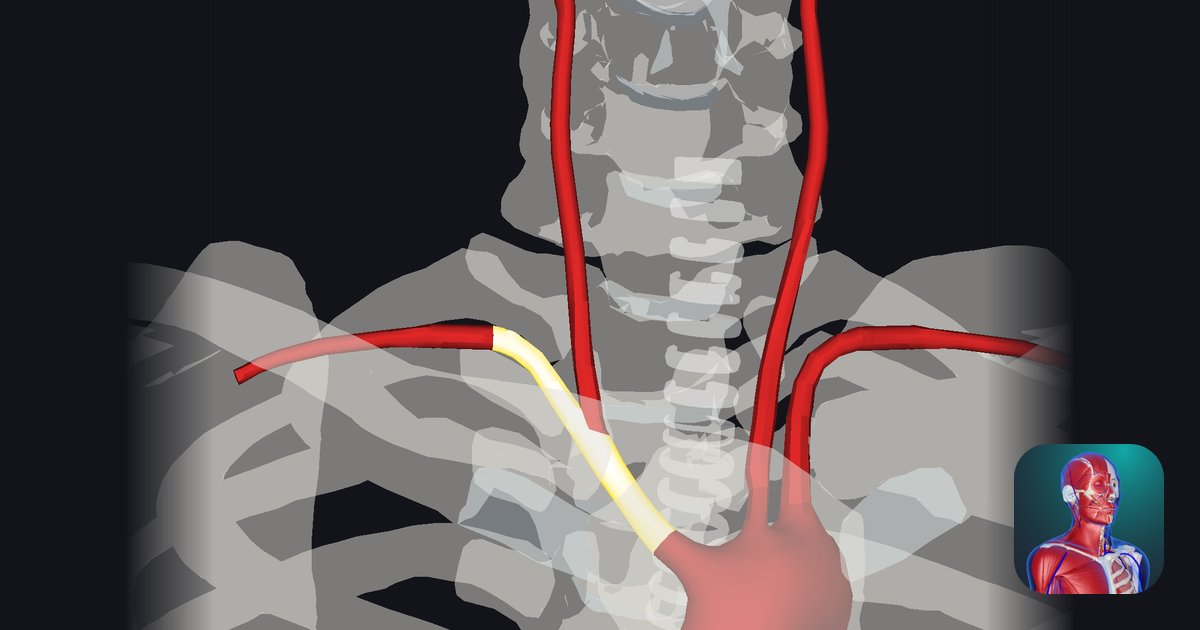
There is one on each side, and each runs upward along the side of the neck. The right arises from the brachiocephalic trunk and the left directly from the arch of the aorta; at the level of the upper border of the thyroid cartilage (the level of C4) each divides into the internal and external carotid arteries. The internal carotid artery gives no branches in the neck and enters the skull to supply the brain and eye, while the external carotid artery supplies the face, scalp and organs of the neck. The swelling at the bifurcation is called the carotid sinus and contains receptors that sense blood pressure.
Where the common carotid artery is
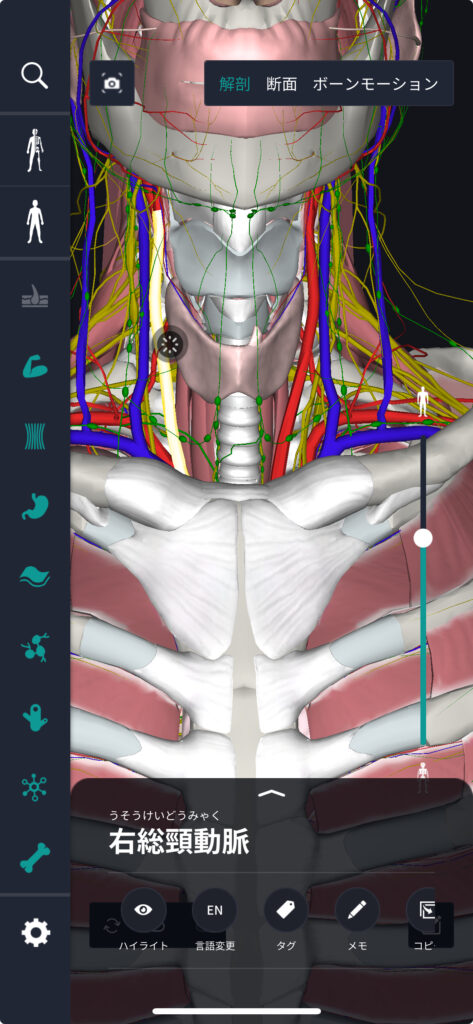
An anatomical illustration is very helpful for understanding its exact position. On an anatomical illustration, the common carotid artery lies slightly to the side at the root of the neck; branching left and right from the aorta coming from the heart, it heads toward the face and brain.
How to remember the common carotid artery
As a memory aid, picture it as "the important road from the heart up to the neck"; this makes its function and position easier to understand.
The common carotid artery in English and Latin
In English it is written “Common carotid artery”, and in Latin it is called “Arteria carotis communis”. These names are used in medical literature and in international communication.
Fun facts about the common carotid artery
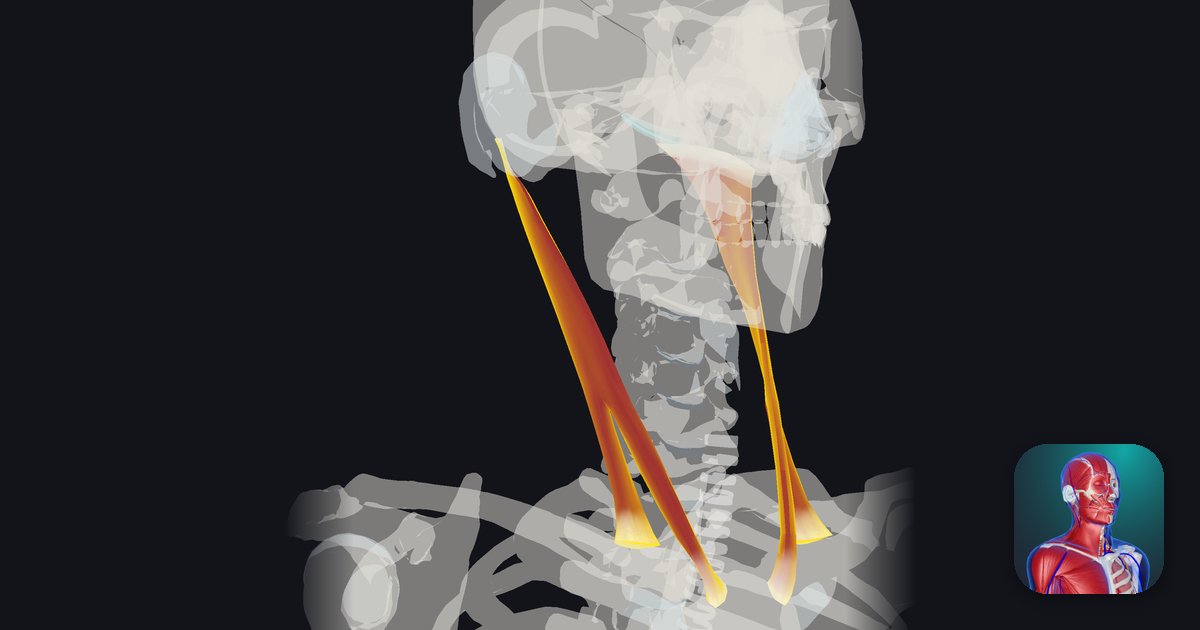
If you put your finger on the front edge of the sternocleidomastoid at the side of your neck, you can feel the common carotid artery pulsing in time with your heartbeat. The basic rule is to feel the pulse gently, one side at a time. The common carotid artery runs together with the internal jugular vein and the vagus nerve inside a connective tissue sheath called the carotid sheath; if you hide the sternocleidomastoid in 3D, you can see the three rising side by side.
Related structure: features of the brain
The brain is the most complex and precise organ in the body. It governs most of our behaviour and physiological functions, including thinking, emotion and motor control. For the brain to work properly, an adequate supply of oxygen and nutrients from the common carotid arteries is essential. This supply is indispensable for brain cells to function normally, for regulating body temperature, for energy metabolism and for synthesizing important substances.
Related structure: position of the brain
The brain lies inside the skull and does not receive blood directly from the common carotid artery. Instead, the common carotid artery ascends through the neck and divides into the internal carotid artery, which enters the skull and supplies oxygen and nutrients to the various parts of the brain. This ensures that each part of the brain keeps functioning properly.
Related structure: fun facts about the brain
The brain accounts for only about 2% of body weight but uses about 20% of the oxygen we take in. The common carotid arteries play a very important role in meeting this high energy demand. The fine network of blood vessels in the brain is also essential for the exchange of substances between nerve cells and other cells, and it is supported by the oxygen and nutrients in the blood delivered by the common carotid arteries.
Quiz on the common carotid artery, with answer
Q: Where in the body is the common carotid artery?
1. In the arm
2. In the intestines
3. In the neck
A: 3. In the neck
Summary
This time we explained where the common carotid artery is, how to remember it, and its English and Latin names.
What did you think?
I hope this article has deepened your understanding of anatomy.
Learning is a long road with no end, but I sincerely wish you success. Let's keep learning together and work toward the exam!
Look forward to the next article.
Learn more with the anatomy app “teamLabBody Pro”!
teamLabBody Pro is a 3D human anatomy app that covers the whole body: muscles, organs, nerves, bones and joints.
The human body is faithfully reproduced from CT and MRI data of multiple subjects. Textbook-level content supervised by doctors can be viewed freely from any angle, so the app can be used in many medical settings, such as explaining surgery to patients and studying anatomy as a student.
If you would like to see the parts introduced this time in more detail, download the anatomy app “teamLabBody Pro”.
Download teamLabBody Pro for free
A 3D anatomy app that shows every structure of the human body
Download teamLabBody Pro here!