Where is the cricoid cartilage? Ring shape, joints and attached muscles
Where is the cricoid cartilage?
Put a finger on your Adam's apple and slide it down. After a small dip, do you feel another firm ring? That ring is the cricoid cartilage.
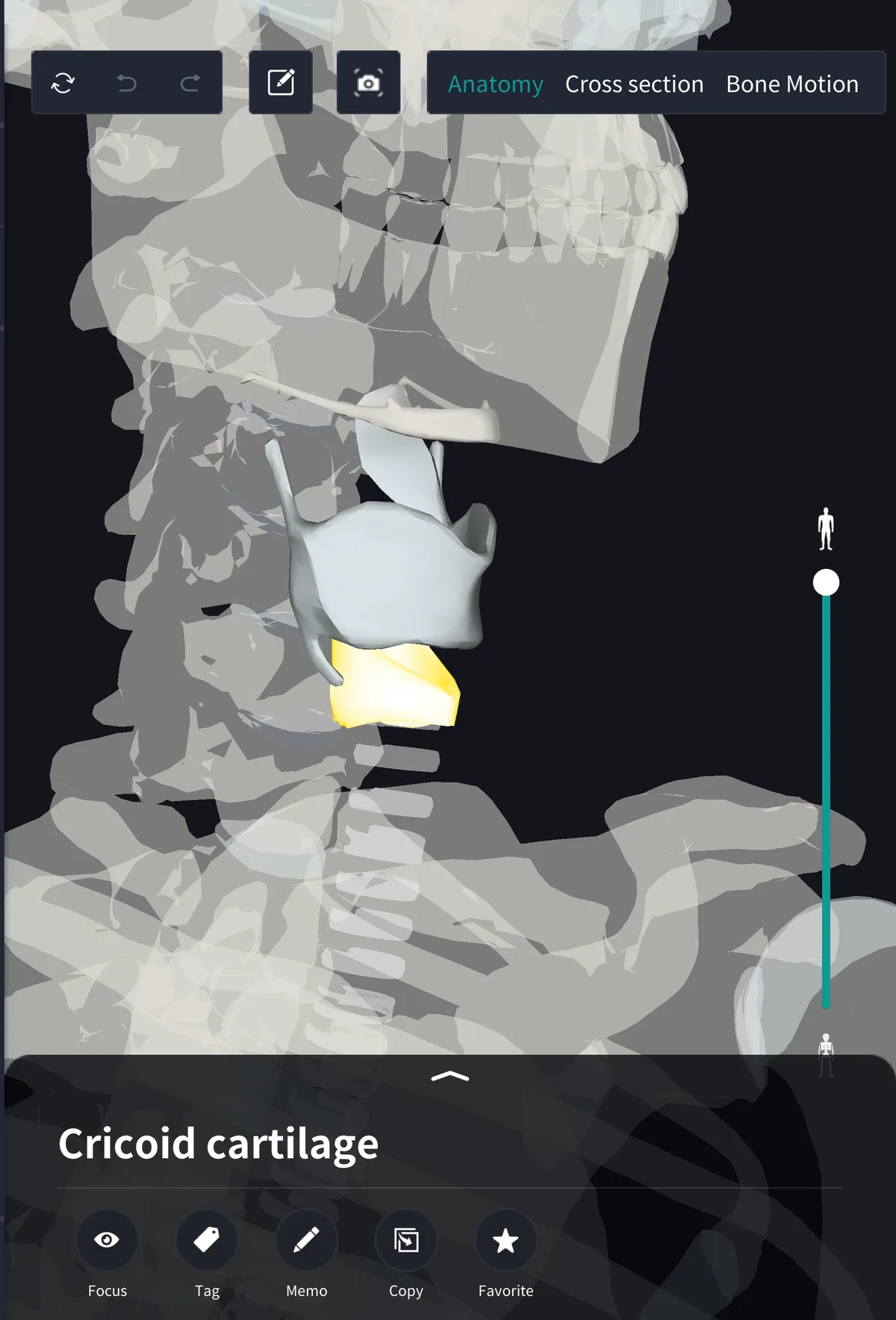
The Adam's apple is the prominence of the thyroid cartilage of the larynx. The dip below it is the membrane filling the gap between the two cartilages, the median cricothyroid ligament. The firm ring below is the cricoid, at about the level of the sixth cervical vertebra. Below it the trachea, a stack of C-shaped cartilages, continues into the chest. How easy it is to feel varies with build.
A signet-ring shape
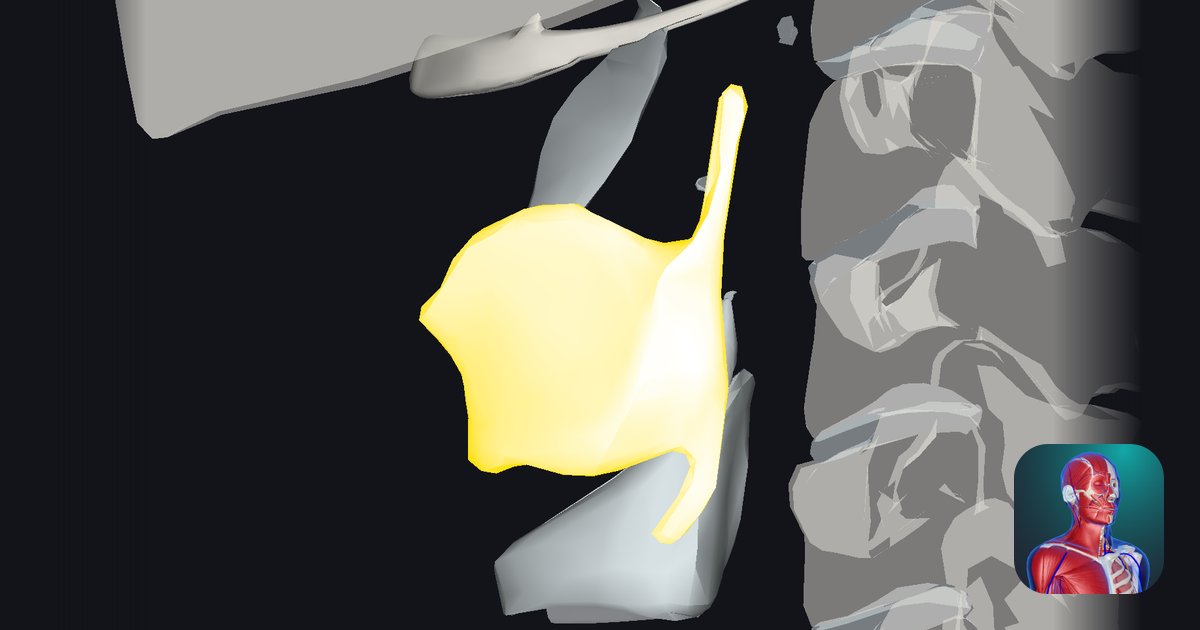
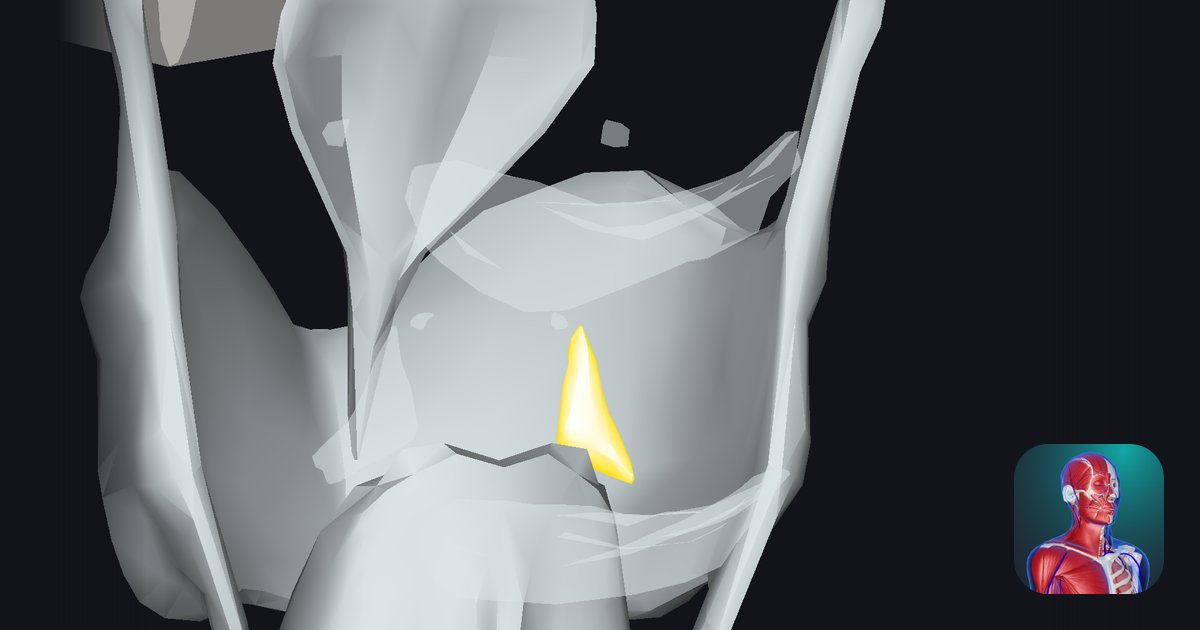
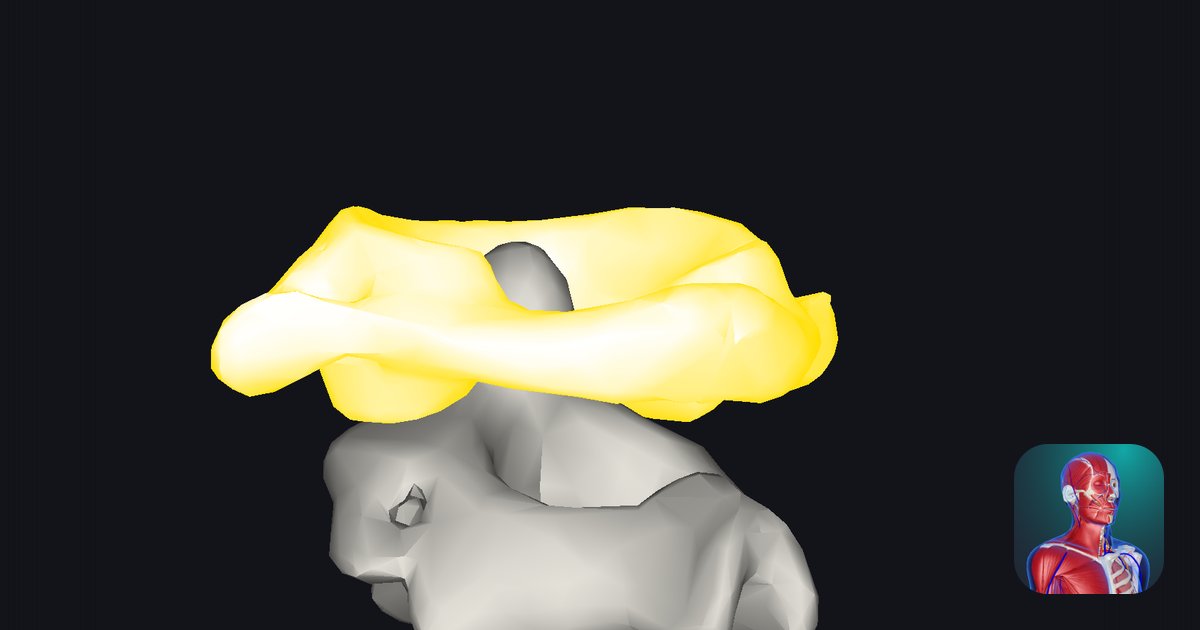
The cricoid is the only complete ring of cartilage in the airway; the tracheal cartilages are C-shaped and open at the back. It is narrow in front (the arch) and tall at the back (the lamina), and is often compared to a signet ring with the lamina as the seal.
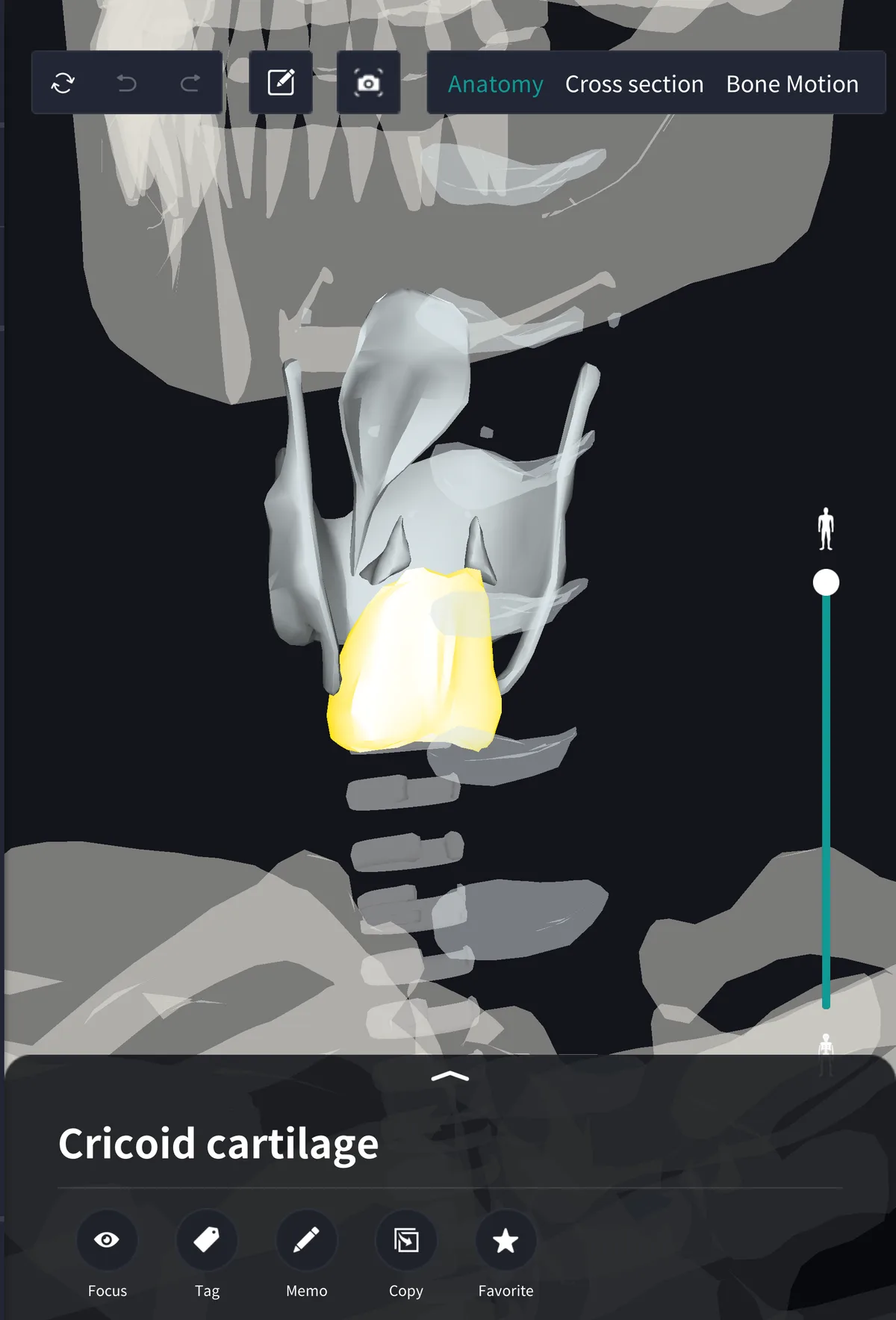
From behind, the two arytenoid cartilages sit on top of the yellow lamina like small pyramids, with the thyroid cartilage and epiglottis behind them.
Joints with the thyroid and arytenoid cartilages
・Cricothyroid joint: between the side of the cricoid and the inferior horn of the thyroid cartilage; lets the thyroid cartilage tilt forward
・Cricoarytenoid joint: between the upper border of the lamina and the base of each arytenoid; lets the arytenoids rotate and glide
Both joints change the tension of the vocal folds and the width of the glottis. The vocal folds run from the back of the thyroid cartilage to the arytenoids, so moving these cartilages changes the folds, with the cricoid as the base.
Muscles attached to the cricoid
・Cricothyroid: from the front of the cricoid to the thyroid cartilage; tilts it forward, stretching the vocal folds and raising pitch
・Posterior cricoarytenoid: from the back of the lamina to the arytenoid; opens the glottis
・Lateral cricoarytenoid: from the side of the cricoid to the arytenoid; closes the glottis
The posterior cricoarytenoid is the only muscle that opens the glottis. The cricothyroid is supplied by the external branch of the superior laryngeal nerve; the other laryngeal muscles by the recurrent laryngeal nerve.
Name and terms
Cricoid comes from the Greek krikos, ring, with -oid, like. Related terms: thyroid cartilage, arytenoid cartilage, cricothyroid. The Latin is cartilago cricoidea.
See it in the app
The laryngeal cartilages are small and overlapping, and a front view cannot show the tall back of the cricoid or where the arytenoids sit. In the 3D anatomy app teamLabBody you can select the cricoid and rotate it to the back to see the lamina and arytenoids together, then add the thyroid cartilage and epiglottis to see the whole larynx. Cross sections are available with the PREMIUM plan.
FAQ
- Where is the cricoid cartilage?
- Just below the Adam's apple. Sliding a finger down from it, you feel a small dip and then a firm ring, at about the level of the sixth cervical vertebra, with the trachea below.
- How is it different from the tracheal cartilages?
- The cricoid is a complete ring, while the tracheal cartilages are C-shaped and open at the back. The cricoid is narrow in front and tall at the back.
- Which muscles attach to the cricoid cartilage?
- The cricothyroid and the posterior and lateral cricoarytenoid muscles. Only the posterior cricoarytenoid opens the glottis.
Related articles
・Larynx: the cartilages and vocal folds
・Cricothyroid: the muscle that raises pitch
・Lateral and posterior cricoarytenoid: close and open the glottis
・Median cricothyroid ligament: fills the dip between the thyroid and cricoid cartilages
・Cricoarytenoid ligament: links the cricoid and arytenoid cartilages