Superior and inferior venae cavae: course and formation
Where do the two venae cavae run?
After circulating through the body, where does blood finally re-enter the heart? Through two entrances: the superior vena cava from the upper body and the inferior vena cava from the lower body.
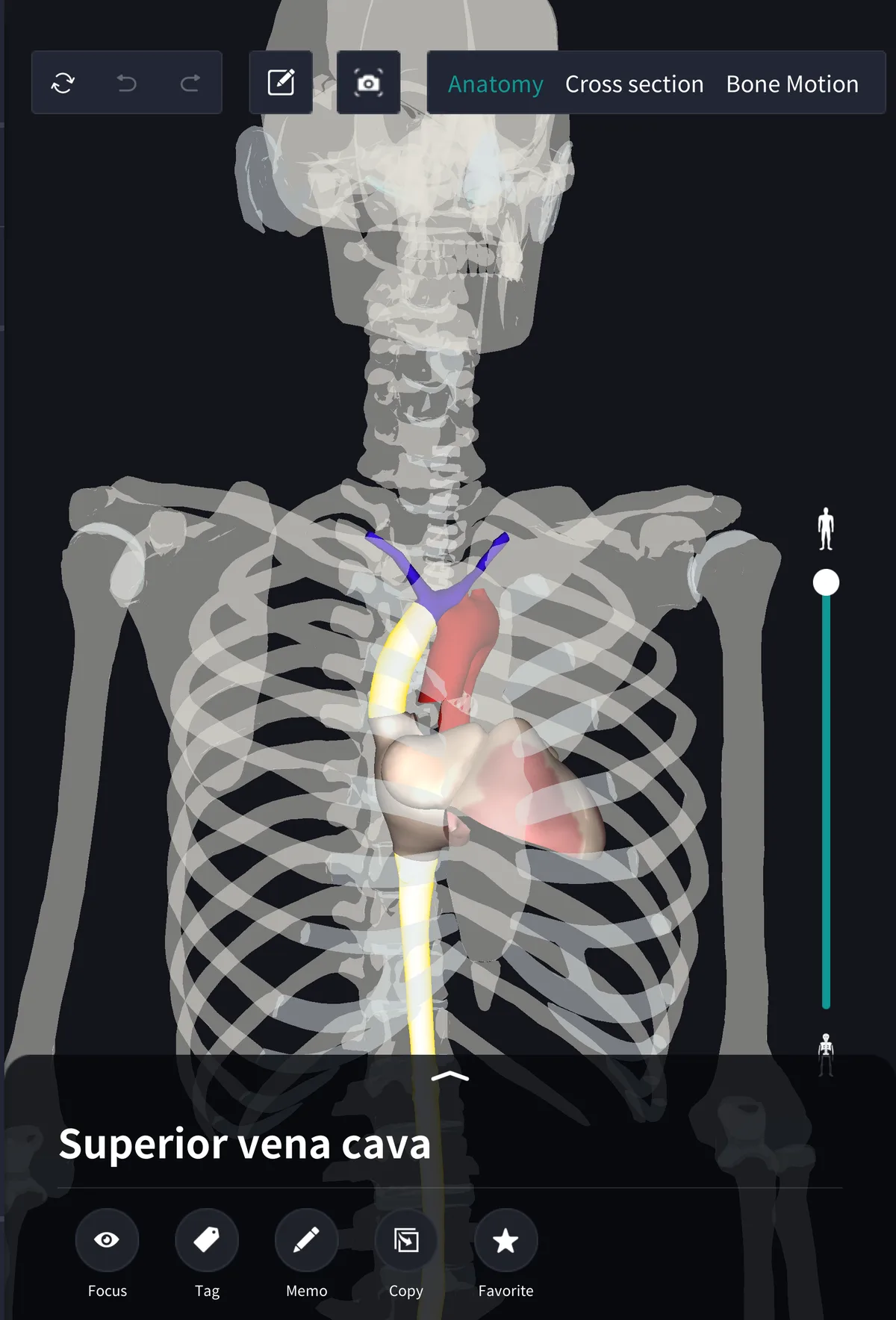
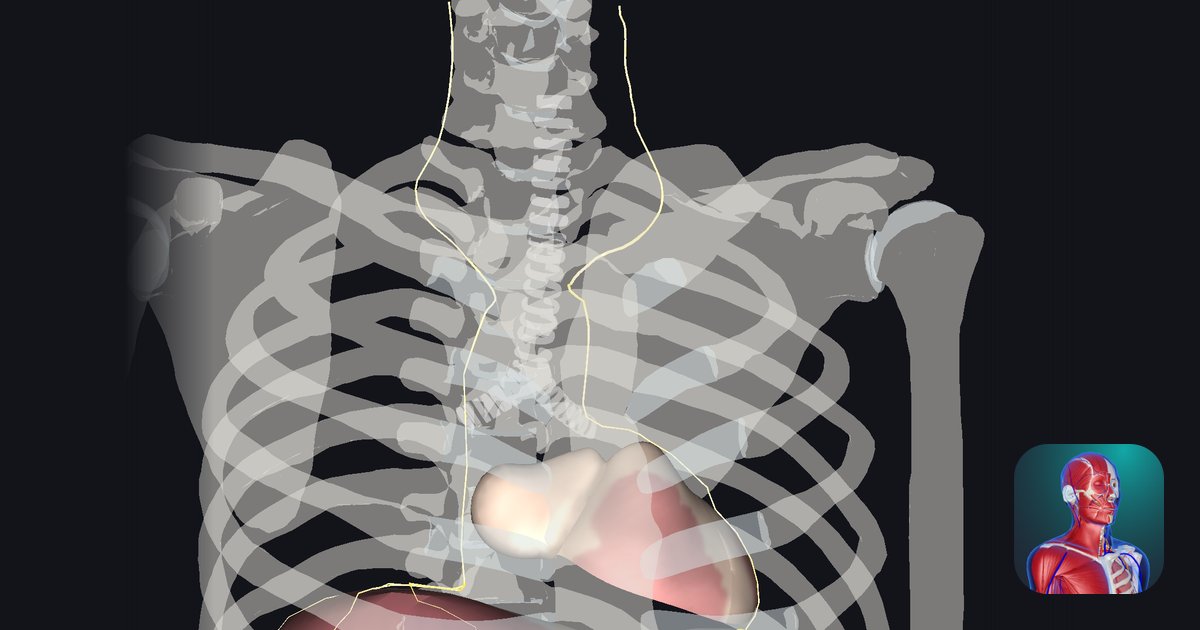
In the view above both are yellow, entering the right atrium on the right side of the heart from above and below, slightly right of the midline. With the aorta they are among the largest vessels in the body.
Superior vena cava: from the brachiocephalic veins
It forms from the right and left brachiocephalic veins, each made by the internal jugular and subclavian veins, behind the right first costal cartilage. It runs straight down the right side of the chest, to the right of the ascending aorta, into the upper opening of the right atrium. It is only a few centimetres long. The azygos vein, draining the chest wall, arches over the root of the right lung to join it from behind.
Inferior vena cava: through the diaphragm
The largest vein in the body forms from the two common iliac veins at about L5 and rises to the right of the abdominal aorta, receiving the renal veins and, behind the liver, the hepatic veins. It passes through the caval opening of the diaphragm and almost immediately enters the lower opening of the right atrium. The diaphragm's three main openings, from low to high, are the aortic hiatus (T12), oesophageal hiatus (T10) and caval opening (T8); textbooks give slightly different levels.
Name and terms
Vena cava is Latin for hollow vein; the plural is venae cavae, often abbreviated SVC and IVC. Related terms: brachiocephalic vein, common iliac vein, caval opening.
See it in the app
Hidden behind the heart, aorta and liver, the venae cavae are hard to follow as a whole. In the 3D anatomy app teamLabBody you can make the bones translucent, keep only the venae cavae and heart, and follow them from the root of the neck to the pelvic brim; add the aorta to see the vein on the right and the artery on the left. Cross sections are available with the PREMIUM plan.
FAQ
- What is the difference between the superior and inferior venae cavae?
- The superior drains the head, neck, arms and chest; the inferior drains the abdomen, pelvis and legs. Both enter the right atrium. The superior is short; the inferior is the largest and longest vein.
- How is the superior vena cava formed?
- From the union of the two brachiocephalic veins behind the right first costal cartilage.
- Where does the inferior vena cava pass through the diaphragm?
- Through the caval opening in the central tendon, at about T8.
Related articles
・Heart: where the venae cavae return blood
・Aorta: runs to the left of the venae cavae
・Internal jugular vein: forms the brachiocephalic vein
・Diaphragm: contains the caval opening
・Femoral vein: returns blood from the leg