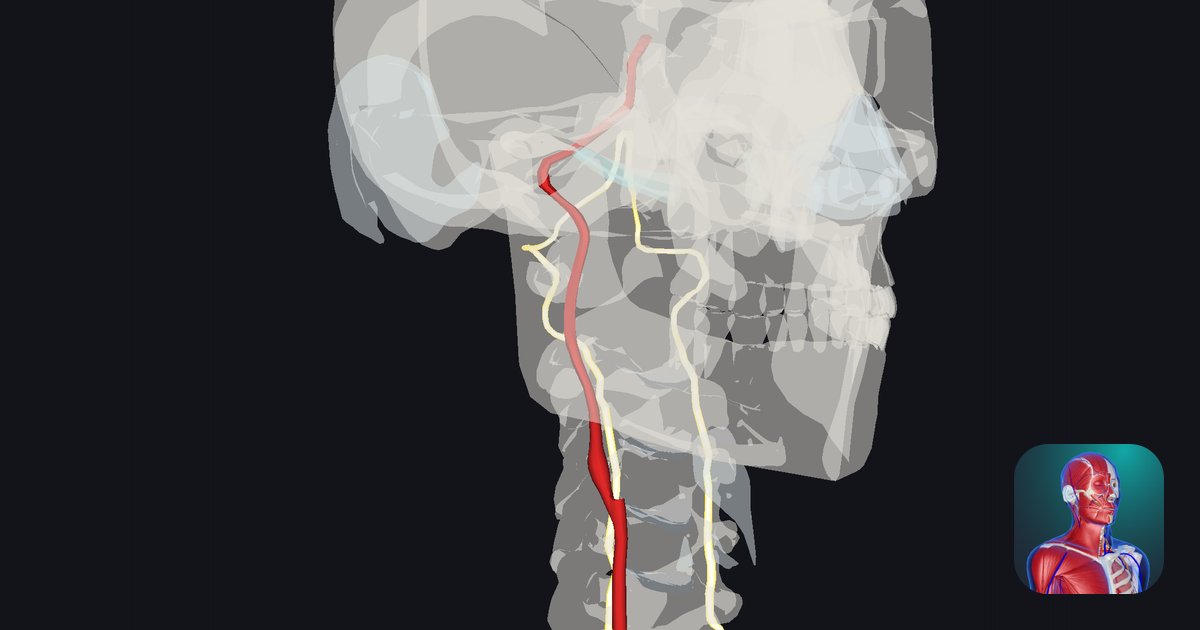
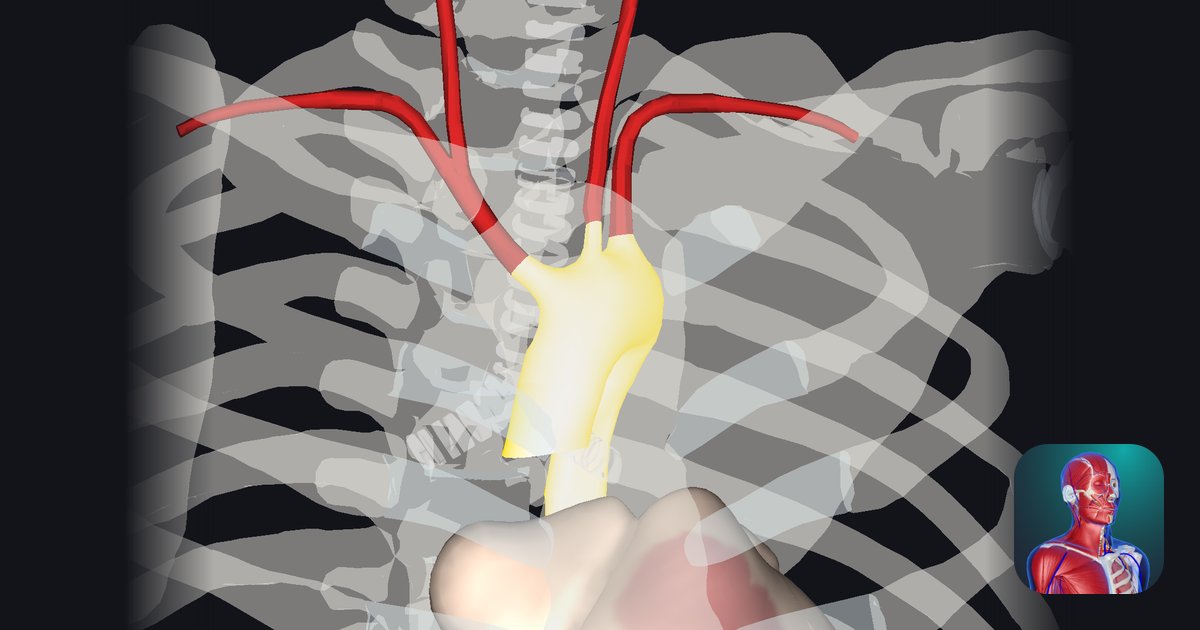
Internal carotid artery: course, branches and how it differs from the external
Where does the internal carotid artery run?
Internal or external carotid: which one goes to the brain? The names are easy to mix up. The internal carotid artery supplies the brain; the external carotid mainly supplies the face and scalp.
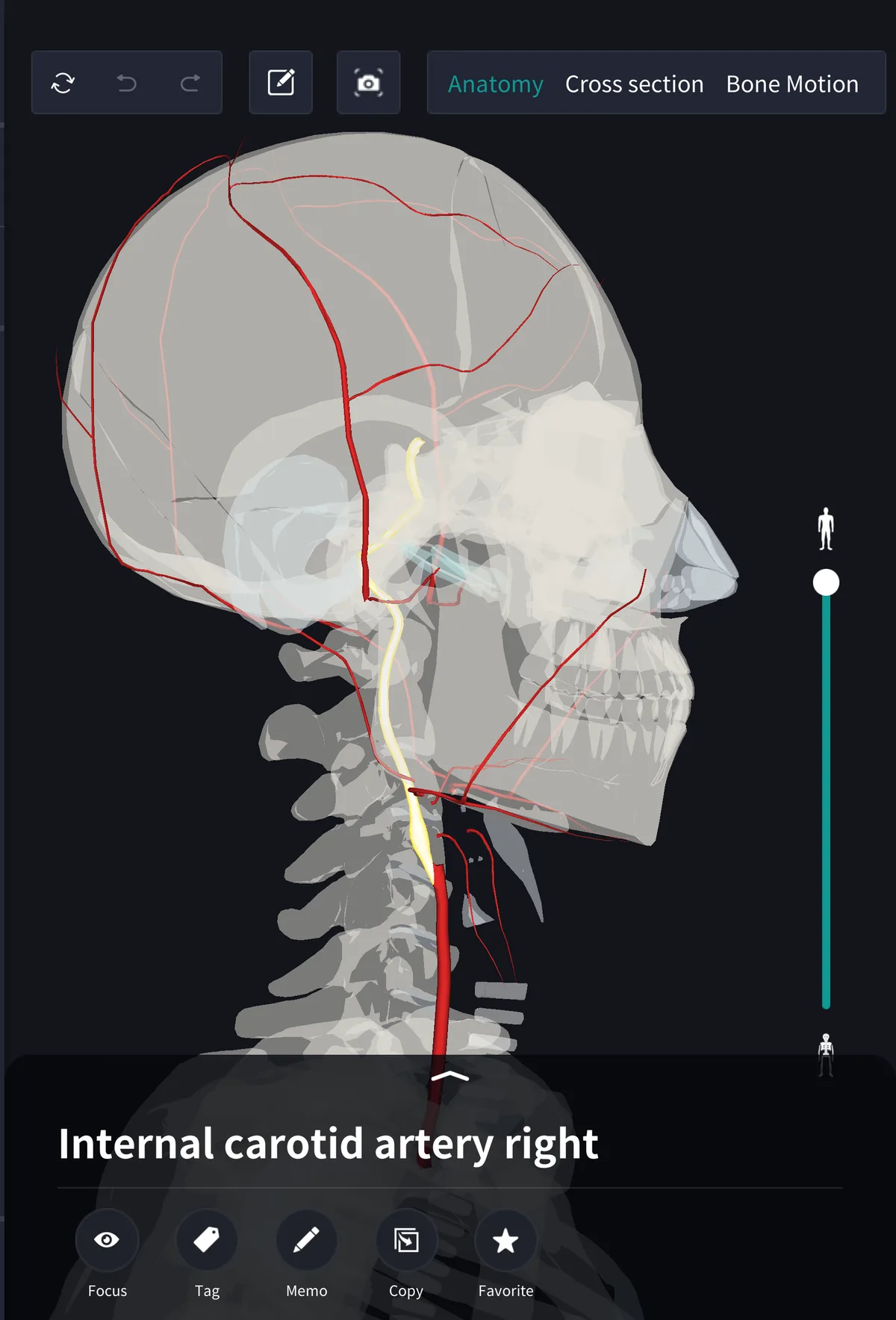
A common carotid artery rises on each side of the neck and divides, at about the level of the upper border of the thyroid cartilage, into the internal and external carotid arteries. The internal carotid rises deep in the neck to an opening in the base of the skull. The level of division varies by about one vertebra between people.
No branches in the neck
The external carotid gives off branch after branch in the neck, such as the superior thyroid, lingual and facial arteries. The internal carotid gives none until it enters the skull. Just after the division the external carotid lies anteromedial and the internal carotid posterolateral. The start of the internal carotid is slightly dilated, the carotid sinus, which senses blood pressure and signals the brain through a branch of the glossopharyngeal nerve.
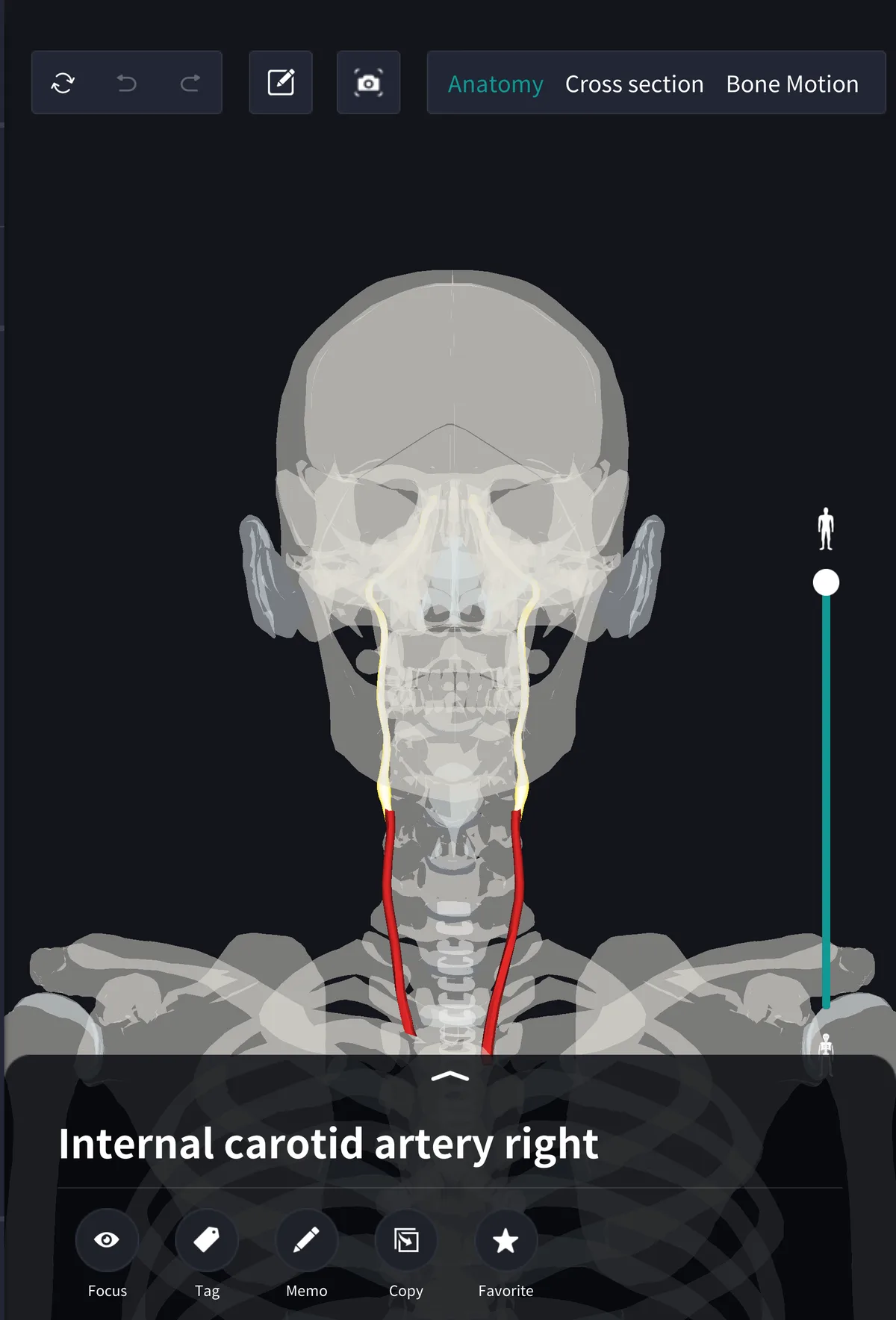
In the neck the artery runs inside the carotid sheath with the internal jugular vein and the vagus nerve, covered by the sternocleidomastoid.
Course inside the skull
At the skull base the artery enters the carotid canal in the temporal bone, turns forward, and then passes through the cavernous sinus, where its S-shaped bend is known as the carotid siphon. After leaving the sinus it gives off the ophthalmic artery, which enters the orbit with the optic nerve, and then ends at the base of the brain by dividing into the anterior and middle cerebral arteries. It is divided into cervical, petrous, cavernous and cerebral parts; some classifications use seven segments.
Two routes into the brain
The brain is supplied by the two internal carotid arteries and the two vertebral arteries, which rise through the cervical vertebrae. The internal carotids supply most of the front and sides of the cerebrum; the vertebral system supplies the back of the brain, including the cerebellum and brainstem. The two systems connect at the base of the brain in the cerebral arterial circle (circle of Willis), which the posterior communicating artery from the internal carotid helps form.
Name and terms
Carotid is said to come from the Greek karoun, to stupefy. Related terms: external carotid artery, common carotid artery, carotid sinus. It is often abbreviated ICA. The Latin is arteria carotis interna.
See it in the app
Because the internal carotid dives from deep in the neck into the skull, drawings lose it partway. In the 3D anatomy app teamLabBody you can make the bones translucent and follow it continuously from the common carotid into the skull, and show the external carotid branches alongside to compare. The left and right arteries can be selected separately. Cross sections are available with the PREMIUM plan.
FAQ
- What is the difference between the internal and external carotid arteries?
- Both arise from the common carotid. The internal carotid enters the skull to supply the brain and eye and gives no branches in the neck; the external carotid supplies the face and scalp and branches extensively in the neck.
- Where does the internal carotid artery arise?
- From the common carotid at about the level of the upper border of the thyroid cartilage. The level varies between people.
- What does the internal carotid artery supply?
- The brain and eye. After the ophthalmic artery it divides into the anterior and middle cerebral arteries.
Related articles
・Common carotid artery: before the division
・Sternocleidomastoid: covers the carotid arteries
・Vagus nerve: runs in the carotid sheath
・Optic nerve: enters the orbit with the ophthalmic artery
・Posterior atlanto-occipital membrane: pierced by the vertebral artery